
7 strength training benefits for men that go way beyond bigger muscles
Posted 31 October 2026
Blog tags:
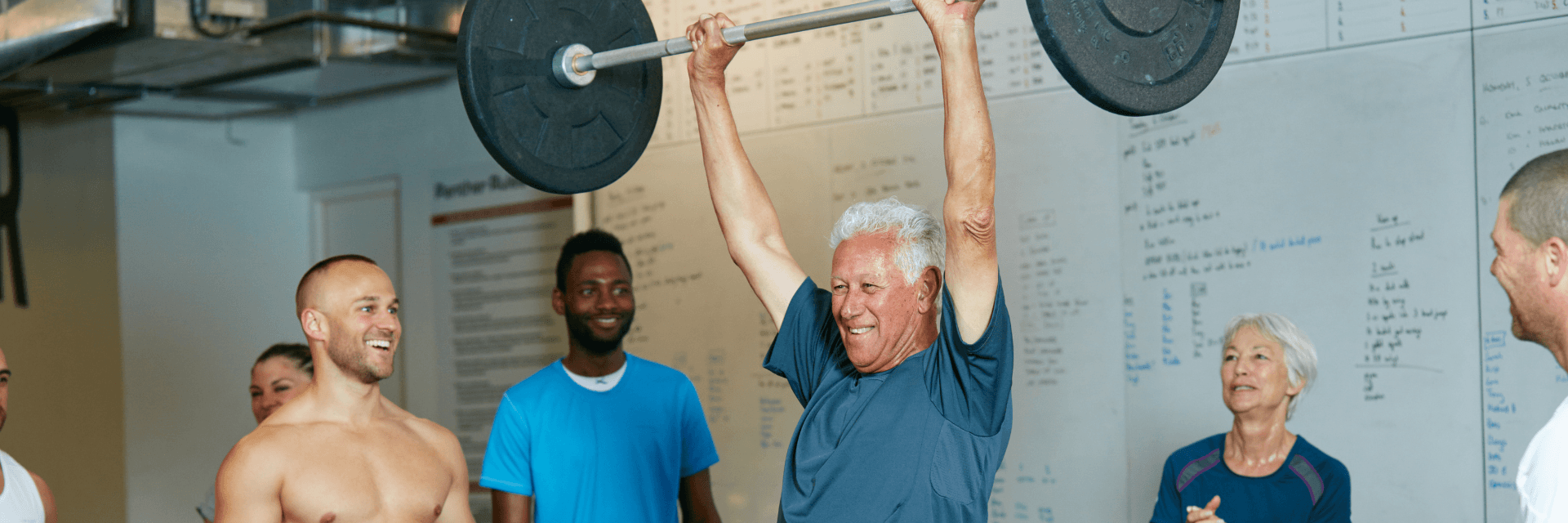
Ask most men why they lift and you'll hear about size, strength or looking good on holiday. Those are fair reasons. But the strength training benefits for men that really count show up years later: stronger bones, more muscle in your 60s, a lower risk of serious illness and a better chance of staying independent as you age.
Here are seven benefits of strength training for men, what the evidence says about testosterone, and how much you actually need to do. For the bigger picture, see our guide to men's health in the UK.
Men and exercise: is strength training already in the guidelines?
Yes, and it's the part a lot of people miss. The NHS physical activity guidelines ask adults to do at least 150 minutes of moderate activity a week, plus strengthening activities that work all the major muscle groups (legs, hips, back, abdomen, chest, shoulders and arms) on at least 2 days a week. The NHS is clear that strength work is in addition to aerobic activity, not part of it.
When it comes to men and exercise, plenty of guys run, cycle or play five-a-side but never pick up a weight. Others lift but do nothing else. Getting the balance right is where the biggest health gains are.
1. You keep more muscle as you age
Muscle doesn't stay put on its own. The NHS lists loss of muscle mass and reduced ability to exercise among the symptoms some men notice in their late 40s and early 50s. It also notes that a lack of exercise can be one of the lifestyle causes behind them. Regular resistance training is the most direct way to build and hold on to muscle, at any age.
2. Your bones get stronger
Bones respond to load. According to the NHS, weight-bearing and resistance exercise are particularly important for improving bone density and helping to prevent osteoporosis. When your muscles and tendons pull on your bones during a lift, it boosts bone strength. Press-ups, weightlifting and gym equipment all count. It's one of the strength training benefits for men that's easiest to overlook, because you can't see it in the mirror.
3. You lower your risk of serious illness
Being active lowers the risk of coronary heart disease, stroke, type 2 diabetes and bowel cancer, and the NHS says it can cut the risk of early death by up to 30%. Strength training is a core part of meeting those guidelines, so it's part of that protection rather than an optional extra.
4. It helps you manage your weight and waist
Muscle helps you look and move better as you lose fat, and lifting burns energy too. Strength training on its own won't outwork a poor diet, but combined with sensible eating it makes weight loss easier to sustain. Our diet and exercise plan for men shows how to put the two together.
5. Your mood and sleep can improve
The NHS says physical activity can boost self-esteem, mood, sleep quality and energy, and lower the risk of stress and depression. Many men find lifting a particularly good way to switch off, because it demands focus and gives you clear progress to track. Our guide to men's mental health explores this in more detail.
6. You're less likely to fall later in life
Regular activity lowers the risk of hip fracture and falls among older adults. That's why the NHS guidelines for adults over 65 include activities that improve strength, balance and flexibility on at least 2 days a week. Building strength in your 40s and 50s puts you in a much better position by the time you get there.
7. Everyday life gets easier
Carrying heavy shopping, lifting your kids or grandkids, digging the garden and moving furniture are all strength tasks. The NHS even lists them as muscle-strengthening activities. The stronger you are, the easier and safer those jobs become, and the longer you'll keep doing them without help.
Exercise and testosterone in men: what's the real story?
You'll see plenty of claims online that lifting heavy will "boost your testosterone". The truth is less dramatic. The NHS explains that testosterone falls steadily, by about 1% a year from around the age of 30 to 40, and that this gradual drop is unlikely to cause problems in itself.
The NHS also says many symptoms blamed on low testosterone, like low energy, low mood and a growing belly, are often down to lifestyle factors instead. Lack of sleep, a poor diet, lack of exercise, drinking too much and stress all play a part. So the link between exercise and testosterone in men is less about a hormone hack and more about the bigger picture. Regular training, good sleep and a healthier weight help you feel better whatever your hormone levels are doing.
If you're worried about symptoms, see your GP. They can check whether a blood test is needed.
How to get started with strength training
You don't need a complicated programme to get the strength training benefits for men we've covered. Whether men exercise at home or in a gym, the principles are the same.
- Train 2 to 3 times a week. Full-body sessions work well for beginners and fit neatly into the NHS guidelines.
- Focus on big movements. Squats, deadlift variations, presses, rows and lunges work several muscle groups at once.
- Work hard enough to need a rest. The NHS says strength exercises should be done to the point where you need a short rest before repeating them.
- Add load gradually. Small increases in weight or reps over time are how you keep progressing.
- Get your technique checked. Most gyms offer an induction, and a qualified Personal Trainer can help you lift safely.
Not sure whether to train for size or strength? Our blog Do you want to be big or strong? looks at how rep ranges affect your results. If you're new to the gym after 50 or have a health condition, speak to your GP before you start. The NHS also has gentle strength exercises you can do at home.
Men's fitness after 40: why it's never too late
The benefits of strength training for men don't stop at any age, and some of the biggest changes come from men who start training later in life. Men's fitness after 40 isn't about chasing the numbers you lifted at 25. It's about building enough strength, muscle and mobility to stay active and independent for decades. Pair your training with good food (our guide to nutrition for men can help) and you'll notice the difference in weeks.
Whenever men exercise with a clear plan and decent technique, they tend to stick with it. That's where good coaching makes all the difference, and it's why so many people decide to train others once they've seen the results for themselves.
Become a Strength and Conditioning Coach
If you love lifting and want to help other men get stronger, healthier and more confident, our Elite Strength and Conditioning Personal Trainer course could be your next step. It combines the qualifications you need to work as a Personal Trainer with a Level 4 Certificate in Strength and Conditioning. You'll study the biomechanical, physiological and psychological factors that affect strength, and how to programme and deliver strength and conditioning for sports performance.
The course is 100% online, so you can study at your own pace, and you'll get guaranteed interview opportunities with our partner gyms. Check the course page for fees and payment options, call our course advisors on 01202 006 389, or send us an enquiry.
Categories
Blog Archive
2026
2025
2024
2023
See what our learners are
saying about us
I’ve just completed my course via the E-learning academy and I want to thank Nick Hewett, my tutor for his exceptional guidance and support. He always responded to my emails and marked my work submissions very promptly, giving really helpful feedback. Couldn’t have asked any more of him.
Andrew4th May 2023. TrustPilot
I just completed my L3 PT Diploma as an e-learning course. It was the perfect option to be able to self-pace my study and coursework as I couldn’t commit to a purely weekday or weekend course, and could do my work when it suited me. The training room provides ample resources for self-study, and a tutor who is always there to help. Hasit Jethwa, my tutor, was excellent at answering any of my questions quickly and was really clear and useful in letting me know what I needed to do! Having Hasit as my tutor really added to my experience of qualifying with The Training Room. Thank you!
Freya1st June 2023. TrustPilot
I’ve just received a Pass for my theory exams, so thought a review would be a good commemoration!
I took the Hybrid Course; a weekly live lecture on Zoom, coursework on Google Classroom. My tutor Hasit Jethwa is a Physio and amongst other accomplishments. He is highly knowledgeable, a self - confessed nutrition nerd, eloquent, and a pleasure to interact with. I really enjoyed my course, and have taken away so much to carry on learning.
It’s a flexible course style which fitted around my lifestyle and other commitments well. L4 Nutrition here I come.
Lucy27th March 2023. Trustpilot
My tutor Liz Shaw has been an absolute diamond! Her support and encouragement throughout the course has made my experience at the training room better than could have imagined. Defo lucked out with her as my tutor. Her knowledge and background in personal training and dance is strong and her teaching style is solid! Thank you Liz and big thanks to the training room!
Venus14th February 2023. Trustpilot
I've just completed the L3 Diploma in Personal Training with the Training Room and would highly recommend it. I took the hybrid option which meant I could fit the work in around working full time.
The tutors were really knowledgeable and supportive throughout the course, and I wanted to give a special shout out to Mark Fox who was just amazing. Mark really knows his stuff and gave us so much help and support in the online lectures, but also any time I reached out to him. He was really quick to respond, and although I'd finished the teaching part of the course I still felt I had support whenever I needed it.
This qualification really is going to change my life and I can't wait to get going. Thanks again to the Training Room and Mark.
Alison9th May 2023. TrustPilot